Sound is an essential part of the Ying Liuyue Nianshisi celebration.
The curatorial theme, Revival, invites visitors to discover the rich musical traditions that have long accompanied the festival.
Over the past century, countless sounds and musical traditions have echoed through the Ying Liuyue Nianshisifestivities:
Daban gongs and drums, Kailu drums, dragon drums, lion drums, sedan-chair drums, Zhentian drums...
Beiguan music of the Xipi and Fulu schools, Shiyin ensembles, Western bands...
Some of these traditions have disappeared over time. Many others, however, continue to thrive through the dedication of Daxi's Shetou organizations, whose members practice and perform year after year, bringing these sounds back to the annual procession.
The drum scores, gong-and-drum notation, Gongche notation, and Western staff notation preserved by these communities form the foundation of the Revival exhibition, celebrating a living musical heritage that continues to resonate across generations.
From the end of World War II through the year 2000, Taiwanese society underwent dramatic transformation—from an agricultural economy to industrialization, commerce, and eventually a service-based economy. The music and sounds of the Ying Liuyue Nianshisi celebration evolved alongside these social changes.
Following World War II, the Ying Liuyue Nianshisi celebration, which had been suspended for several years during the war, made a vibrant return. As the annual procession resumed, the late 1940s through the 1950s became the golden age of zidi opera (amateur Beiguan opera) performances.
The various Shetou organizations competed to present elaborate productions. Strong, rugged men transformed into the graceful Magu in Magu Presents Birthday Blessings, while slender young performers donned elaborate armor and painted faces to portray the valiant general Jiang Wei in Battle of Tianshui Pass. Watching familiar neighbors become legendary characters on stage became one of the community's favorite talking points.
Several Shetou organizations—including Tongren Society, Xing'an Society, and Xieyi Society in central Daxi; Ren'an Society in Neizha; Xinsheng Society in Sancheng; and Yongan Society and Yongfu Tongyi Society in Wutuku—once devoted the collective efforts of their members to staging these performances. Old costume trunks still preserved in the storage room of Xinsheng Society quietly recall the grandeur of productions such as Purple Terrace Mountain once performed on the stage of Fu'an Temple in Sancheng.
Although amateur opera eventually faded away due to the tremendous time, expense, and manpower required to sustain it, Beiguan music continued to accompany the annual procession, carrying on the tradition of honoring Lord Guan's birthday.
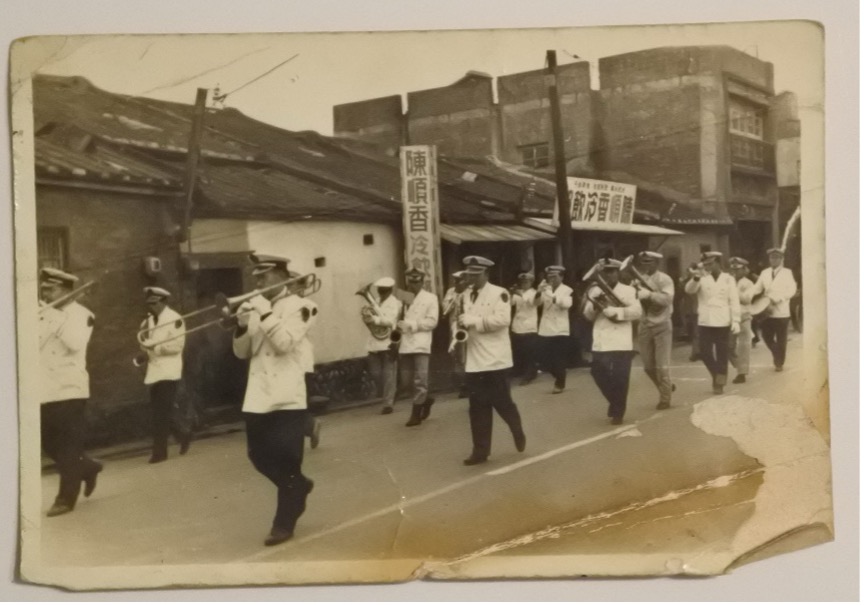
During this period, the growing demand for Western-style music at weddings, funerals, and other community events led to the rapid expansion of Western bands in Daxi.
One of the most influential figures was Li Shiyi, affectionately known as "Bearded Yi," a student of the pioneering music instructor Wu Ben. Together with his own students, he trained generations of local musicians and helped establish or instruct Western bands for numerous Shetou organizations, including Gongyi Troupe, Xing'an Society, Le'an Society, the United Western Band, and the Liansheng Western Band, alongside the pioneering Dayou Society Band.
At the height of this musical tradition, as many as three or four Western bands performed simultaneously in the same festival procession—an unprecedented spectacle in Daxi's history.
Residents would simply bring a small stool and sit beneath the arcades, enjoying what felt like a front-row seat to an open-air concert. Every year on the afternoon of the 24th day of the sixth lunar month, the streets filled with an uninterrupted procession of Beiguan ensembles and Western bands, one after another, creating a vibrant musical celebration that lasted until evening.
During this era, dragon drums and lion drums became an integral part of the festival procession alongside dragon and lion dance troupes.
Unlike the melodic sounds of Beiguan or Western bands, the expressive power of drumming lies in rhythm, tempo, dynamics, and striking different parts of the drum to create varied tones. The fluid movements of the dragon dance and the lively energy of the Cantonese lion dance both rely on the driving rhythms of these drums to bring their performances to life.
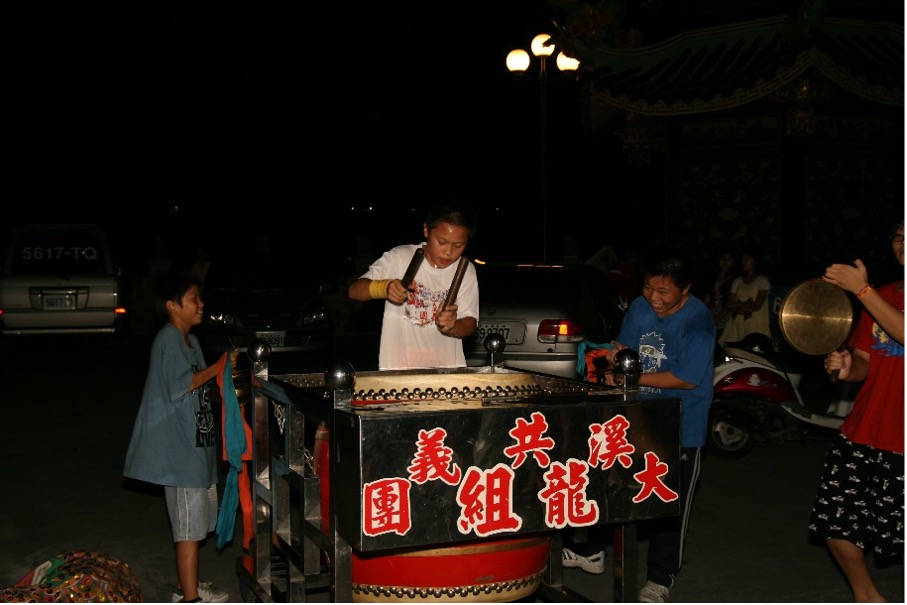
For many children, the dragon drum also became their first introduction to the Ying Liuyue Nianshisi celebration. Countless members of today's dragon dance teams still remember standing on a small round stool at just five years old, learning to play the dragon drum—a shared childhood memory passed down through generations.
Gongyi Troupe's Evening Practice — Young Boys Taking Turns to Play the Drum
Photo courtesy of Wu Min-Hui, 2009
Liansheng Western Band Performing in the Festival Procession — Their Smart, Uniformed Appearance Was One of the Event's Highlights
Photo courtesy of Jiang Jia-Tian, 1980s
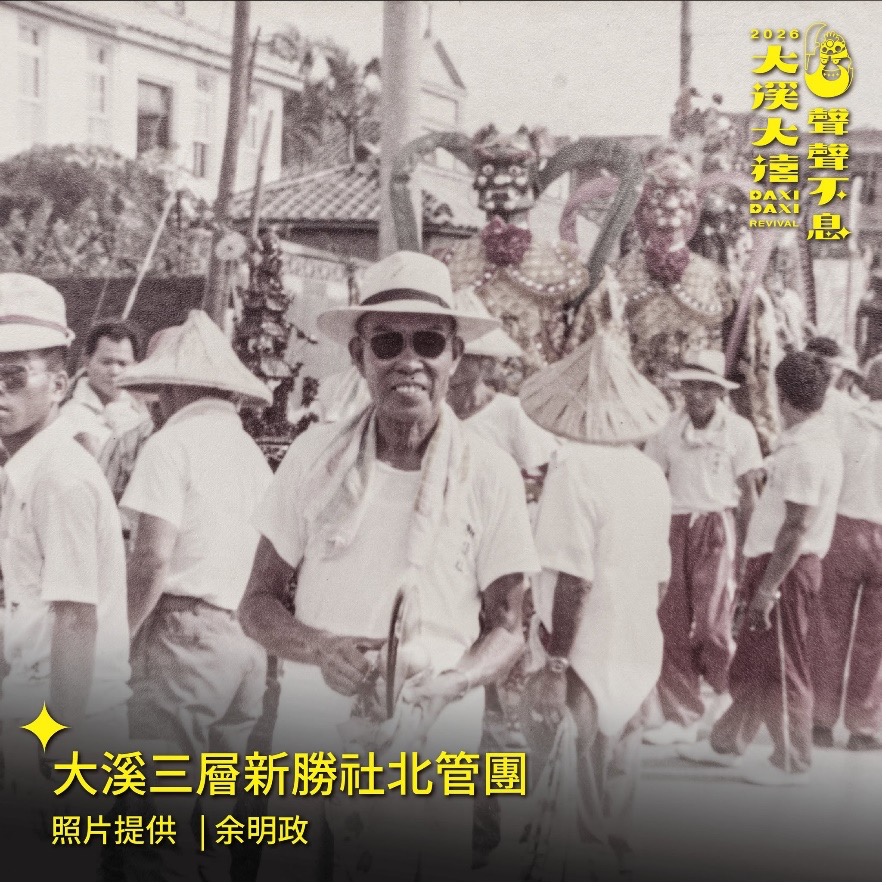
Xinsheng Society Beiguan Ensemble Joining the Festival Procession; a Floral Drum Stand Can Be Seen in the Left Background
Photo courtesy of Yu Ming-Zheng







Facebook分享
Twitter分享
Line分享
複製網址分享