Sound is an essential part of the Ying Liuyue Nianshisi celebration.
The curatorial theme, Revival, invites visitors to discover the rich musical traditions that have long accompanied the festival.
Over the past century, countless sounds and musical traditions have echoed through the Ying Liuyue Nianshisifestivities:
Daban gongs and drums, Kailu drums, dragon drums, lion drums, sedan-chair drums, Zhentian drums...
Beiguan music of the Xipi and Fulu schools, Shiyin ensembles, Western bands...
Some of these traditions have disappeared over time. Many others, however, continue to thrive through the dedication of Daxi's Shetou organizations, whose members practice and perform year after year, bringing these sounds back to the annual procession.
The drum scores, gong-and-drum notation, Gongche notation, and Western staff notation preserved by these communities form the foundation of the Revival exhibition, celebrating a living musical heritage that continues to resonate across generations.
Author / Wu Min-Hui
Since 2000, the soundscape of the Ying Liuyue Nianshisi celebration has become increasingly vibrant with the addition of new styles of drum ensembles. Through the wholehearted guidance of senior musicians and the dedication of younger generations, Beiguan music continues to be passed down. With every generational transition, learning and performing the traditional repertoire in honor of Lord Guan remains both the original purpose and the enduring motivation of Daxi's Shetou organizations.
As temple festivals across Taiwan became more interconnected, a wider variety of drumming traditions found their way into Daxi's annual procession. Hakka drums, sedan-chair drums, and Zhentian drums joined the festival alongside the long-established dragon and lion drums.
Unlike dragon and lion drums, which primarily provide rhythmic accompaniment for dance performances, these newer drum ensembles place greater emphasis on the performers' technical skill, synchronization, and stage presence. Their powerful rhythms not only drive the procession but also energize the crowd, reflecting the confidence and expressiveness of a younger generation.
For the Shetou organizations, introducing new performance traditions serves a dual purpose: encouraging younger people to participate while offering an even richer celebration in honor of Lord Guan. The more diverse and lively the performances, the more sincerely the community expresses its devotion.
As many veteran Beiguan musicians reached the end of their performing careers in the late twentieth century, preserving Daxi's century-old musical tradition became an urgent priority. At the beginning of the twenty-first century, Fu'an Societyand Xinsheng Society in Sancheng, Qingyi Society, Yongan Society, and the Daxi Agricultural Troupe successfully completed their first major generational transition, ensuring that their Beiguan ensembles would continue.
What seems like only yesterday soon became another milestone. Around 2020, a new generation of musicians once again took up the tradition under the spiritual protection of King Xiqin, the patron deity of Chinese opera, and Marshal Tiandu, the guardian deity of performers. Alongside musical training, they inherited the values of their predecessors—their reverence for the deities and their selfless dedication to their communities.
Following the establishment of the Daxi Wood Art Ecomuseum in 2015, public resources have further strengthened the preservation and transmission of Daxi's performing arts traditions. In an effort to restore Daxi's historic status as one of Taoyuan's major centers of Beiguan music, Yongfu Tongyi Society, Fushan Temple in Xizhou, and Gongyi Troupehave all recruited and trained new members.
Thanks to the sustained commitment of the Shetou organizations and the educational support provided by the museum, seven locally based Beiguan ensembles participated in the 2026 Ying Liuyue Nianshisi procession. Echoing the exhibition theme Revival, the music continues to resonate across generations, keeping Daxi's Beiguan tradition vibrantly alive.
For more than a century, Daxi's Shetou organizations have offered music training in temple courtyards, village gathering spaces, community centers, and society halls. Open to people of all ages and backgrounds, these classes have introduced countless participants to Beiguan, Shiyin, Western music, and traditional drumming, making them some of Taiwan's most accessible community classrooms for traditional performing arts.
Taking inspiration from this long-standing tradition, the 2026 Daxi Daxi Festival presents Revival as its annual theme. In collaboration with local Shetou organizations, the festival offers a series of hands-on workshops and live performances, inviting visitors to experience, appreciate, and connect with the remarkable sounds and musical traditions that have accompanied the Ying Liuyue Nianshisi celebration for generations.
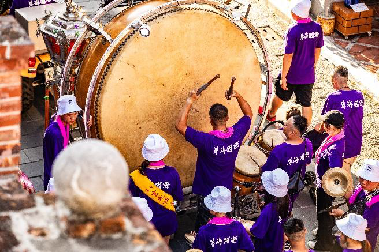
Xuanyuan Society Zhentian Drum Ensemble
Photo courtesy of Liangyi International, 2023
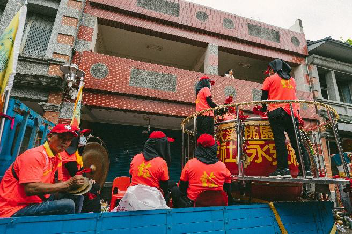
Yongan Society Floral Drum Troupe — One of the Few Female-Led Performance Troupes in Daxi
Photo courtesy of the Daxi Wood Art Ecomuseum, 2020
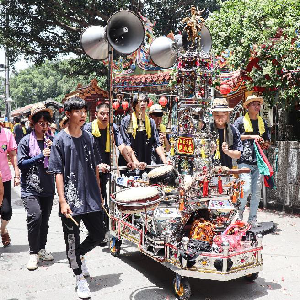
Tongyi Society Beiguan Ensemble in the Festival Procession — Many Young Students Participate in the Transmission of This Musical Tradition
Photo courtesy of the Daxi Wood Art Ecomuseum, 2024
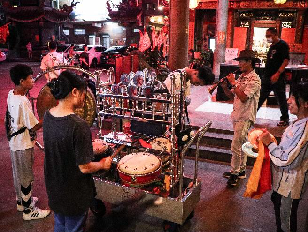
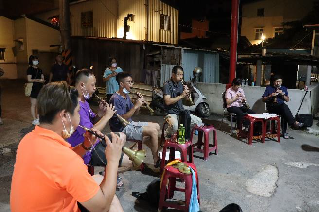
Gongyi Troupe Beiguan Ensemble Practicing at Night — An Example of Recent Efforts in Revitalizing and Passing Down the Tradition
Photo courtesy of the Daxi Wood Art Ecomuseum, 2023
Night Practice of the Sancheng Fu’an Society Beiguan Ensemble — In addition to percussion and wind instruments, Fu’an Society has resumed learning the long-lost bowed string instrument (Kezi Xian) in Daxi since 2025.
Photo courtesy of the Daxi Wood Art Ecomuseum, 2022







Facebook分享
Twitter分享
Line分享
複製網址分享